
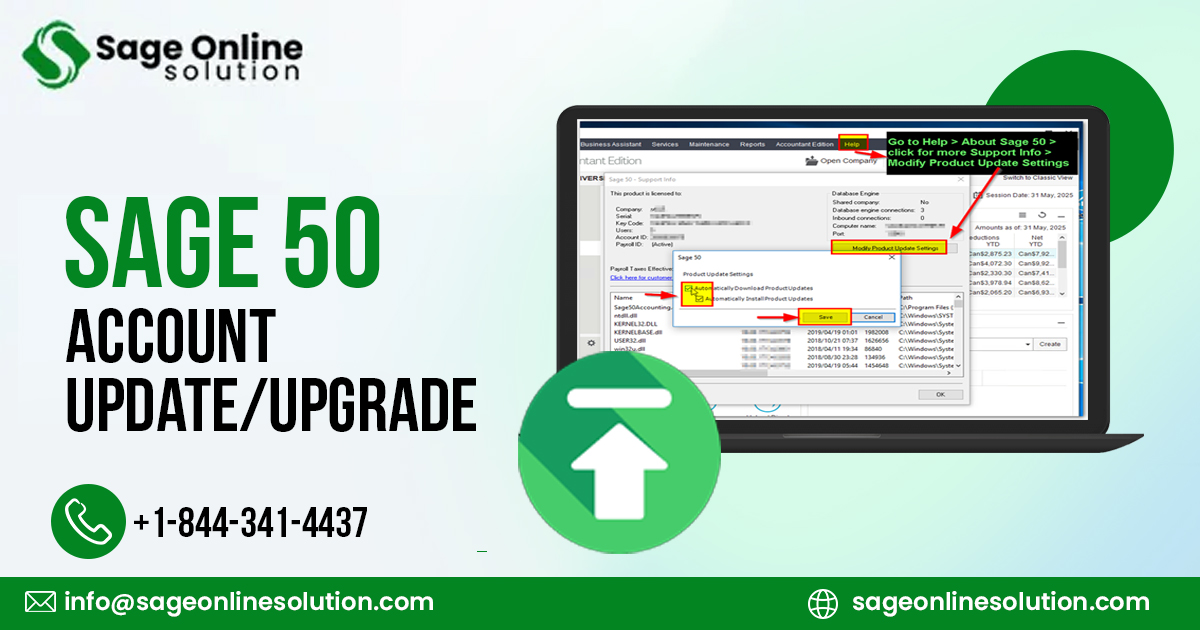
Keeping accounting software updated is essential for smooth business operations, better security, and access to the latest features. Many businesses continue using older versions of Sage 50, but outdated software may create compatibility issues, performance problems, and errors while managing financial records. If you are planning to Update Sage-50 old version to latest version, following the correct upgrade process can help you move your company data safely without unnecessary interruptions. For users who need assistance during the upgrade process, guidance is available at +1 (844) 341-4437 to understand the correct steps.
Updating Sage 50 is not only about installing a new version; it also includes preparing your system, checking requirements, creating backups, and ensuring your company files are compatible. A proper upgrade process helps maintain accounting accuracy and allows businesses to take advantage of improved tools and features.
Why Should You Update Sage 50 Old Version to Latest Version?
Using an outdated accounting application can affect productivity and create challenges when working with modern operating systems. Sage regularly releases updated versions to improve functionality, security, and overall user experience.
Some important benefits of upgrading Sage 50 include:
- Improved software performance and stability
- Better compatibility with updated Windows operating systems
- Enhanced security features
- Faster processing of accounting transactions
- Improved reporting capabilities
- Fixes for previous software errors and bugs
- Access to newly added accounting features
Businesses rely on accurate financial information, and keeping Sage 50 updated ensures that users can manage invoices, payroll, inventory, banking, and reports more efficiently.
Things to Do Before Updating Sage 50
Before starting the process to Update Sage-50 old version to latest version, proper preparation is necessary. A few simple checks can prevent data loss and installation problems.
1. Check System Requirements
Every new Sage 50 version has specific system requirements. Before upgrading, confirm that your computer meets the required specifications, including:
- Operating system compatibility
- Available storage space
- Processor requirements
- RAM requirements
- Network settings for multi-user installation
Checking compatibility helps avoid installation failures after downloading the latest version.
2. Create a Backup of Sage 50 Company Data
A complete backup is one of the most important steps before upgrading. Your Sage company file contains important financial information, including customer records, vendor details, transactions, payroll information, and reports.
To create a backup:
- Open Sage 50 on your computer.
- Go to the backup option from the File menu.
- Select a secure location to save the backup file.
- Complete the backup process before installing the new version.
Having a backup ensures that you can restore your information if any issue occurs during the upgrade.
3. Note Your Sage Account Information
Keep your Sage account details, activation information, and subscription information available before starting the update. This information may be required during installation or activation of the upgraded version.
How to Update Sage 50 Old Version to Latest Version
The process of upgrading Sage 50 is straightforward when performed correctly. Follow these steps carefully.
Step 1: Close Sage 50 and Other Applications
Before beginning the upgrade, close Sage 50 and all unnecessary programs running on your computer. This helps prevent conflicts during installation.
If you use Sage 50 in a network environment, ensure all users log out of the company file before starting the update.
Step 2: Download the Latest Sage 50 Version
Visit the official Sage platform or use your Sage account to access the latest available version. Download the appropriate installation file based on your product edition and subscription.
Make sure you select the correct version to avoid compatibility issues with your existing company data.
Step 3: Install the New Sage 50 Version
After downloading the setup file:
- Run the Sage 50 installation file.
- Follow the instructions displayed on the screen.
- Accept the license agreement.
- Choose the installation location.
- Allow the installation process to complete.
The installer may automatically detect the previous Sage version and upgrade the existing installation.
Step 4: Convert Sage Company Files
After installing the latest Sage version, open your company file. Sage may ask permission to convert the file into the new format.
Before converting:
- Confirm that your backup is available.
- Verify that the company file belongs to the correct business.
- Allow Sage to complete the conversion process.
Once completed, your company data will be ready to use in the updated version.
Common Issues During Sage 50 Upgrade
While upgrading Sage 50 is usually simple, some users may encounter errors. Understanding common problems can help resolve them quickly.
Sage 50 Update Installation Failed
This issue can occur due to:
- Incorrect installation files
- Insufficient permissions
- Antivirus interference
- Windows compatibility problems
Running the installation as an administrator and temporarily checking security settings may help complete the process.
Sage 50 Company File Compatibility Error
Older company files sometimes require conversion before they can work with the latest Sage version. Always create a backup before converting your data.
Sage 50 Won’t Open After Update
If Sage does not launch after upgrading, possible causes include:
- Damaged installation files
- Missing Windows updates
- Conflicting background applications
- Incorrect network settings
Restarting the system, repairing the installation, or checking Sage configuration settings can help fix the problem.
Tips for a Successful Sage 50 Upgrade
Following best practices can make the upgrade process easier and safer.
- Always keep a recent backup before updating.
- Update Windows before installing new software versions.
- Remove unnecessary temporary files.
- Check user permissions before installation.
- Close background applications during setup.
- Verify company data after completing the upgrade.
Regular maintenance improves Sage 50 performance and reduces the chances of unexpected errors.
Why Keeping Sage 50 Updated Is Important for Businesses
Accounting requirements continue to change, and businesses need reliable tools to manage financial operations. Updated Sage 50 versions provide improved functionality that supports better accounting management.
New versions often include improvements related to:
- Data security
- Payroll processing
- Tax updates
- Reporting tools
- User experience
- System reliability
By regularly updating Sage 50, businesses can maintain accurate records and avoid issues caused by outdated software.
Final Thoughts on Updating Sage 50 Old Version to Latest Version
The process to Update Sage-50 old version to latest version becomes easier when you prepare properly, create backups, and follow each installation step carefully. Upgrading helps businesses improve performance, maintain security, and use the latest accounting features without losing important financial information. If you face difficulties while upgrading Sage 50 or need guidance with the process, you can get assistance through +1 (844) 341-4437 for help with update-related concerns. Keeping your Sage software current ensures a smoother accounting experience and better long-term productivity.